

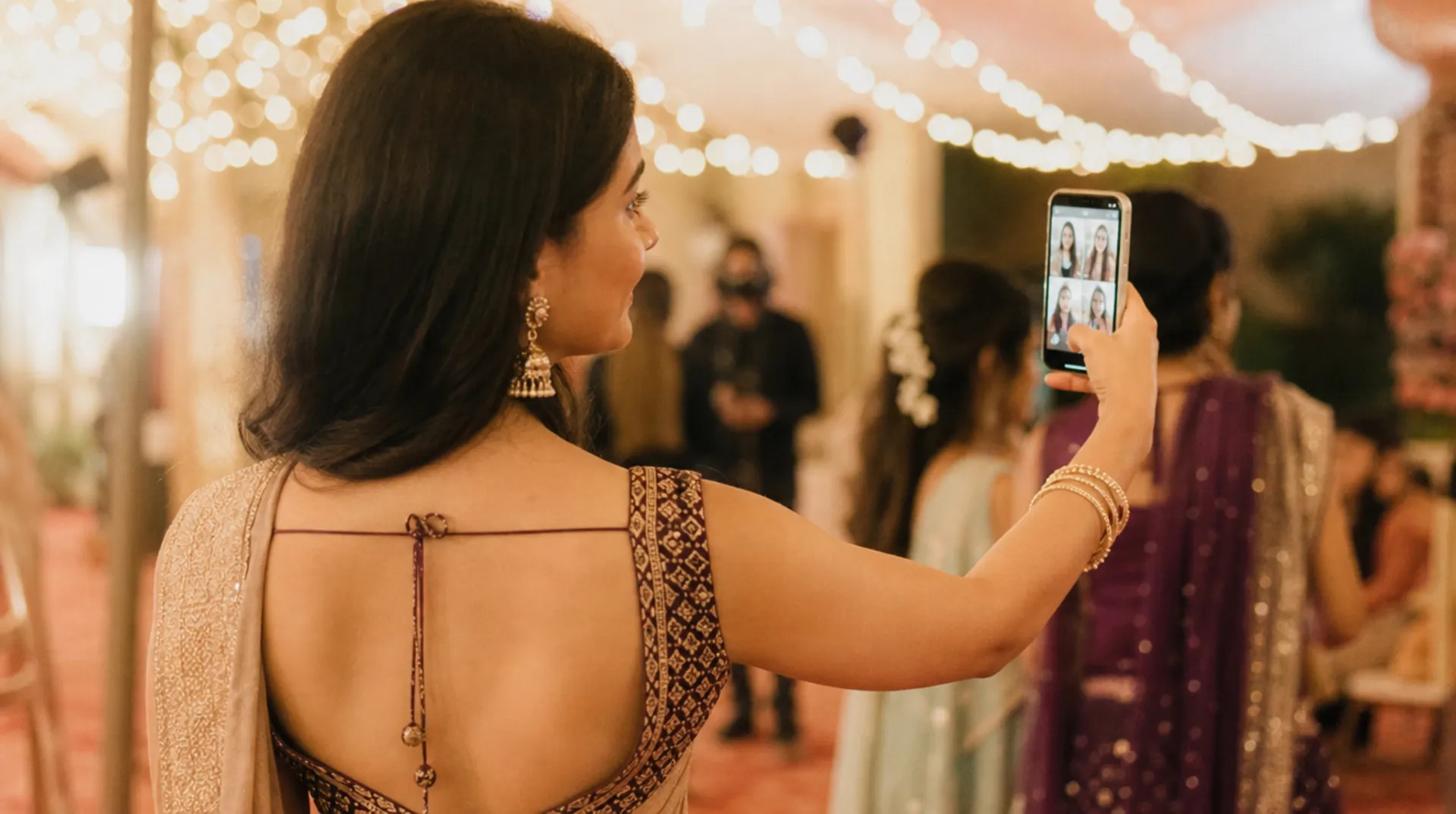
At a big Indian wedding — 500 guests, 5,000 photos across three days of functions — nobody is going to scroll the whole gallery to find the dozen shots they're in. Selfie-based face matching solves exactly that: a guest takes a selfie on their phone, and the gallery instantly shows them the photos they appear in. No scrolling, no app, no login. It turns "where are my photos?" from an hour of squinting into a five-second selfie.
This is one of those features that sounds futuristic and is actually mundane in the best way — it just removes a real, daily annoyance. Here's how it works and why it matters for Indian studios specifically.
The problem it actually solves
Indian weddings are large, multi-day, and multi-family. The guest list runs into the hundreds. The photo count runs into the thousands. And every one of those guests wants the handful of photos they're in — at the sangeet, in the group shot, dancing at the reception.
Without face matching, you get one of two bad outcomes. Either guests give up and never see their photos (a missed delight, and missed word-of-mouth for your studio), or they flood the couple and the studio with "can you send me the ones of us?" requests that someone has to fulfil by hand. Multiply that by 500 guests and you understand why most studios just don't offer guest-level delivery at all.
Face matching makes guest-level delivery feasible without any manual work.
How selfie-to-gallery matching works
The mechanics are simple from the guest's side:
- The guest opens the gallery link (shared by the couple or studio).
- They take a quick selfie in the browser — no app install.
- The gallery compares that face against the photos in that event's album and shows the matches instantly.
- They browse, download what's allowed, and they're done.
The key design point for India: it has to work in a web browser, with no login. Asking hundreds of guests to create accounts or install an app would kill it before it started. The whole value is that it's frictionless enough for a guest's grandmother to use once.
Why "album-scoped" matters
Good face matching is scoped to a single event. The guest's selfie is compared only against the photos in that one wedding's gallery — not some giant cross-event database. That's both the right privacy posture and the more accurate one: a smaller, event-specific set means fewer false matches and a cleaner result.
If you're evaluating a gallery tool, this is the question to ask: is face matching contained to the individual event, or pooled across everything? Event-scoped is what you want.
The privacy conversation, done honestly
Face matching uses a guest's selfie, so be upfront about it — vague hand-waving erodes trust, and clear communication builds it.
What to tell guests, plainly:
- The selfie is used to find their photos within this event's gallery.
- It's optional — they can always browse the full gallery manually instead.
- Matching is scoped to the album, not a global database.
Resist the urge to make grand privacy claims you can't back up. "We never store anything" is a claim that needs to be true in code, not just in marketing. Honest, specific language ("your selfie is used to match you within this gallery, and it's optional") earns more trust than a sweeping promise.
How PhotoSelect does face search
In PhotoSelect, face search is a guest-routing feature inside the delivery workflow — not the product's whole story. A guest opens the WhatsApp-ready gallery link, takes a selfie in the browser, and sees the photos they're in, with matching scoped to that individual album. It works on the mobile devices and patchy venue networks Indian weddings actually run on. The point isn't the AI — it's that the right guest reaches the right photos fast, which is what makes guest-level delivery worth offering at all.