

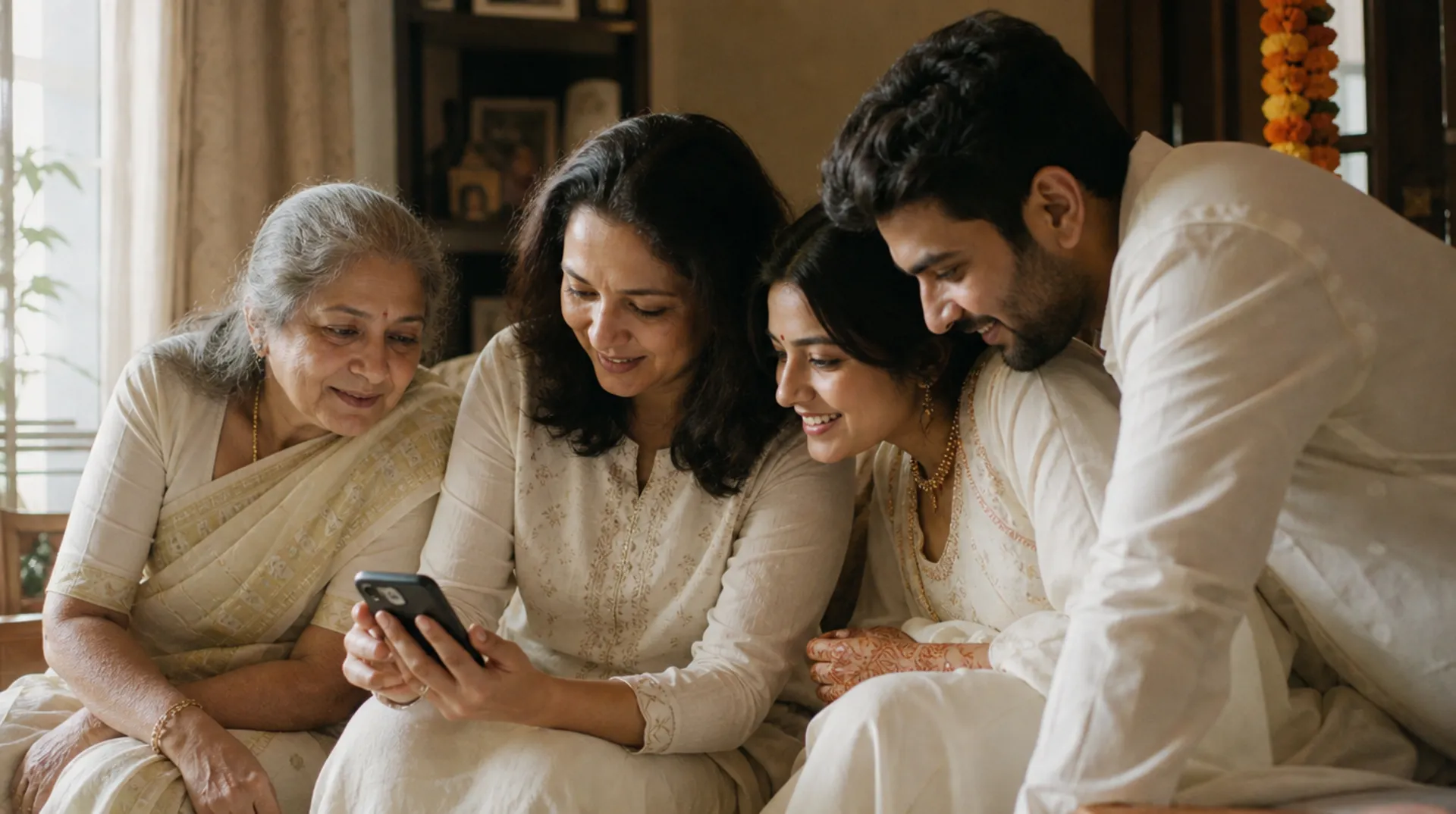
The best way to deliver wedding photos to clients in India is in stages, through a mobile-first gallery rather than a raw file dump: a quick teaser within a couple of days, a full preview gallery the family can browse and select from within a week or two, and the high-resolution originals released on final payment. Done this way, delivery becomes a clean, trackable experience instead of three weeks of WhatsApp back-and-forth — and you get paid along the way instead of chasing it afterward.
This guide covers the whole thing: the delivery methods Indian studios actually use, how long each stage should take, what your clients are quietly expecting, and where payment fits.
The delivery methods, honestly compared
Most studios reach for one of three options. Each has a real place — the mistake is using the wrong one for the wrong stage.
WhatsApp. Unbeatable for teasers. The whole family is already there, it's instant, and a few hero shots on the wedding-night group do more for word-of-mouth than anything. But WhatsApp compresses images, strips resolution, and has no concept of selection or payment. The moment you try to deliver the full set through it, you've turned your business into an unsearchable chat thread. We broke down the full cost of running a photography business through WhatsApp — the compression, the lost payment opportunity, and the missing delivery proof.
Google Drive (or Dropbox). The default for delivering volume, and it technically works. But a Drive folder is a filing cabinet, not a delivery experience: clients hit permission errors on mobile, there's no branding, no signal of who opened what, and — critically — no payment step. You hand over everything, then hope the balance follows.
A client gallery. A proper gallery is built for this exact job: a branded, mobile-first link the family opens without an app or login, browses, shortlists, and pays through. It works on the patchy networks you get inside banquet halls, and it tells you who opened, who selected, and who still needs a nudge. This is what "delivering professionally" actually means in 2026.
The short version: WhatsApp for the teaser, a gallery for the delivery, and never a raw Drive folder as your main channel once you're serious.
The three-stage delivery timeline
Setting expectations is half the job. A clear timeline removes anxiety and gives the family something concrete to look forward to at each step.
Stage 1 — The teaser (within 24–72 hours). Five to fifteen of your best frames, delivered fast. Clients share these immediately on social media, which is free word-of-mouth for your studio. WhatsApp is perfect here. Send these as a gift, not a transaction.
Stage 2 — The selection gallery (one to two weeks). A web-resolution or watermarked gallery of the full edit-worthy set, shared as a proper link. This is where the family shortlists their favourites — ideally several of them browsing from different phones at once, which is how Indian families actually decide. No more single Drive link passed around a WhatsApp group while everyone screenshots their picks.
Stage 3 — The full gallery (four to eight weeks). Final high-resolution images, delivered in full. State this window in your contract. For a sense of why payment belongs here, see how to collect payment before delivering wedding photos — the originals should unlock on final payment rather than going out followed by a manual chase.
What your clients are actually expecting
Indian wedding clients rarely articulate this, but the studios that delight them are the ones who quietly meet these expectations:
- Speed on the teaser. The first photos matter emotionally and socially. A same-week teaser buys you weeks of patience on the full edit.
- To choose together. A wedding is a family event, and so is choosing the photos. Multiple people want to weigh in, from multiple phones. A workflow that assumes one decision-maker fights the culture.
- No technical friction. Your client's mother should be able to open the gallery on a mid-range Android, on a weak network, without creating an account. Every login wall and permission error costs you goodwill.
- A clear finish line. They want to know when they'll have everything, and they want the handover to feel clean — not a payment argument disguised as a delivery.
Where payment fits
Delivery and payment are the same conversation in India, where the cultural norm is to pay before you collect. The cleanest approach is to share the selection gallery freely, then release the high-resolution originals on final payment — automatically, so you're not personally chasing anyone. We wrote two dedicated guides on this: collecting payment before delivery and the real cost of deliver-then-chase.
How PhotoSelect handles delivery
PhotoSelect runs this whole timeline as one workflow built for Indian studios. You upload the album; the family gets a mobile-first preview gallery as a WhatsApp-ready link — no app, no login, working through bad venue networks. Multiple family members can shortlist at once. The high-resolution originals stay in a payment-gated vault and unlock automatically when a UPI/Razorpay payment confirms. And a delivery ledger shows you who opened, selected, and paid, so the rare nudge you send is precise instead of a guess — with zero commission on what your clients pay.